AI in Healthcare – A New Kind of Intelligence
A deeply human look at how artificial intelligence is reshaping medicine in ways we never expected.
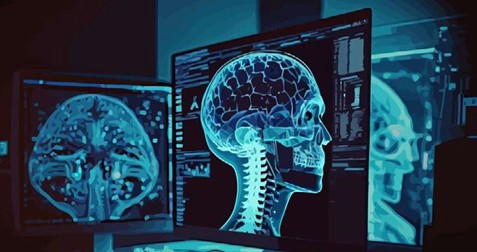
Artificial intelligence is entering medicine in a way that feels both subtle and revolutionary. It is not unfolding through robots replacing clinicians or machines making autonomous decisions. Instead, AI is changing healthcare through something quieter and far more profound: its ability to see patterns that the human mind was never built to hold.
For generations, medicine has been shaped by information from the scans, lab results, vital signs, notes, imaging, histories. Each patient carries thousands of data points that shift hour by hour. No clinician, no matter how talented, can track all of it at once. But AI can. And that single truth is reshaping what becomes possible at the bedside, in the clinic, and across entire health systems.
What AI does in medicine is less about “thinking” and more about listening. It listens to pixels in an X-ray that hint at pneumonia before symptoms develop. It listens to slight changes in heart rate, oxygen levels, and lab trends that softly warn of deterioration long before a patient looks unwell. It listens across millions of prior cases, learning to recognize patterns too subtle for human perception. In doing so, AI becomes a kind of second set of eyes... a calm partner that never tires, never blinks, and never stops analyzing.
Radiology was the first field the world assumed AI would sweep away entirely. Headlines predicted the “end of radiologists” and the dawn of full automation. But reality, as always, is more nuanced and more human. AI did transform radiology, but not by replacing radiologists. Instead, by empowering them. It became a tool that enhances accuracy, catches subtle findings, accelerates workflows, and reduces fatigue.
And in a twist that surprised the very people who predicted its downfall, the field is growing. On the Joe Rogan podcast, NVIDIA’s CEO Jensen Huang explained that the number of radiologists has actually increased, not decreased. The fear that AI would eliminate radiology jobs missed a fundamental truth: the more imaging we create, the more complexity clinicians face, and the more assistance they need. Advances in CT, MRI, ultrasound, PET scans, and interventional procedures have exploded the demand for skilled interpretation. AI did not shrink the field...it helped it keep pace with a rapidly expanding universe of diagnostic data.
This is the real story of AI in medicine. It does not make the profession smaller. It makes the work deeper.
The greatest value of AI is not in replacing clinicians, but in returning them to what humans do best. AI can scan thousands of images; it cannot sit with a family and explain a diagnosis. AI can predict risk; it cannot understand fear, hope, grief, or resilience. AI can read a pattern; it cannot read a person.
And yet, by carrying part of the cognitive load, AI frees clinicians to do the things only humans can do: listen closely, notice emotion, understand context, make meaning, build trust.
We are already seeing the early outlines of a new era. Radiology uses AI to flag abnormalities invisible to the naked eye. Emergency departments use early-warning algorithms to identify patients who may decline before outward signs appear. Primary care integrates AI-powered risk scores that anticipate chronic diseases years before they manifest. Everywhere we look, AI protects the most human parts of medicine by supporting the most technical ones.
What AI offers medicine is not automation but anticipation! For most of history, healthcare has been reactive. Someone becomes sick, and we respond. AI invites a shift toward a gentler, more proactive form of care. It gives clinicians a chance to intervene earlier, intervene less dramatically, and intervene more personally.
This is not science fiction. It is happening right now, woven into the background systems of hospitals and clinics across the world. And it is only the beginning. As AI continues to learn from imaging, genomics, labs, physiology, and day-to-day life, we will unlock a clarity about human health that has never before been possible.
The future of medicine is not a competition between doctors and machines. It is a partnership: a merging of human judgment and artificial pattern recognition. A collaboration that allows clinicians to think more clearly, see more deeply, and act more wisely.
In that partnership, medicine becomes more human, not less. And the soul of healthcare remains exactly where it has always belonged: with the patient, and the people who care for them.